Deciphering the Rubric: The Anatomy of a High-Distinction Nursing Paper
Stepping into the world of nursing is often a whirlwind of clinical rotations, patient interactions, and mastering the art of the 12-hour shift. However, for many students, the real challenge begins when the scrubs come off and the laptop opens. Moving from the fast-paced environment of a hospital ward to the structured world of academic writing can feel like learning a second language. You aren’t just reporting what happened; you are analyzing, reflecting, and applying evidence-based practice to a digital page.
The secret to moving from a “pass” to a “high distinction” isn’t just about working harder; it’s about working smarter by understanding exactly what your professors are looking for. Many students feel overwhelmed by the sheer volume of research required, which is why some choose to buy nursing essay assistance from myassignmenthelp to see how a professional structure looks before they dive into their own drafts. When you can see a clear example of how clinical knowledge translates into academic formatting, the entire process becomes less intimidating and much more manageable.
The Foundation: Understanding the “Why” Behind the Rubric
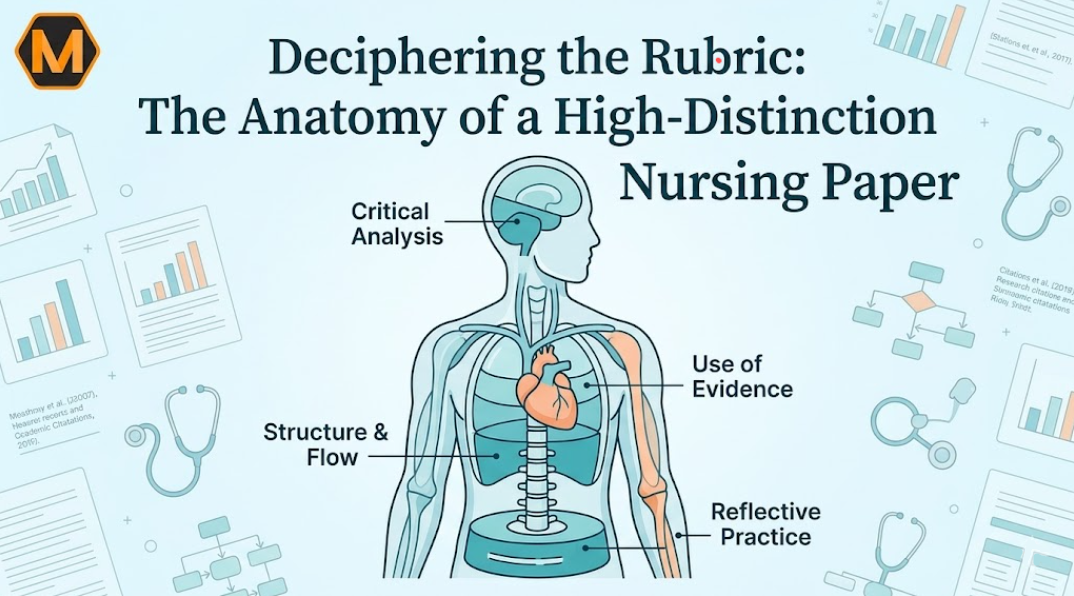
Before you type a single word, you must look at your assignment rubric. Think of the rubric as a GPS for your essay. It doesn’t just tell you the destination; it shows you the exact turns you need to take to get there. Most nursing rubrics are divided into specific categories: critical analysis, use of evidence, logical flow, and formatting. If you ignore one section, even if the rest of your paper is brilliant, your grade will suffer.
A high-distinction paper doesn’t just “mention” facts. It connects those facts to patient outcomes. For example, if you are writing about hand hygiene, don’t just say it’s important. Instead, use the literature to explain how specific hygiene protocols reduce the incidence of healthcare-associated infections (HAIs) in surgical wards. This level of depth shows that you aren’t just a student—you are a future healthcare professional who understands the “why” behind the “do.”
The Breakdown of a High-Distinction (HD) Rubric
To help you visualize what an examiner is looking for, refer to the table below. This represents the “Anatomy” of a top-tier paper versus a standard pass.
| Grading Criteria | Pass (50-64%) | High Distinction (85%+) |
| Critical Analysis | Descriptive; summarizes the topic without much questioning. | Evaluative; identifies gaps in research and debates different clinical perspectives. |
| Evidence Usage | Uses 3-5 general sources; some may be outdated or non-academic. | Uses 10+ recent, peer-reviewed journals; integrates Evidence-Based Practice (EBP) seamlessly. |
| Structure & Flow | Information is present but jumps between topics without clear transitions. | Logical progression; each paragraph builds on the previous one with a clear “thread.” |
| Reflective Depth | Briefly describes an event; focuses on “what happened.” | Deeply analyzes feelings, theories, and future actions using a recognized model. |
| Referencing | Multiple errors in APA formatting or inconsistent citation styles. | Flawless APA 7th edition formatting; citations support every major claim. |
Evidence-Based Practice: The Heart of Nursing Theory
In the medical field, we don’t do things because they “feel right.” We do them because the research proves they work. Your essay needs to reflect this mindset. This is where many students struggle to find the right balance between their own voice and the voices of the experts. You need to use peer-reviewed journals that are usually no more than five years old to ensure your information is current.
When you are deep in the research phase, it can be easy to lose your own argument under a mountain of quotes. To avoid this, use the “PEEL” method for every paragraph: Point, Evidence, Explanation, and Link. Make your point, back it up with a citation, explain how that evidence supports your argument, and then link it back to the overall nursing care plan or the assignment prompt. If you find the technical side of citations or finding journals too difficult, utilizing academic writing services can provide the structural framework needed to keep your thoughts organized.
The Anatomy of a Logical Argument
A great nursing paper flows like a conversation. The introduction should set the stage, the body paragraphs should build the argument piece by piece, and the conclusion should tie everything together without introducing new information. One of the most common mistakes is “ping-ponging” between ideas. If you are talking about patient communication in one paragraph, don’t jump to medication dosage in the next without a clear transition.
Transitions are the glue of your essay. Use phrases like “In addition to,” “Conversely,” or “Building upon this framework” to guide your reader. Remember, your professor is likely grading dozens of papers. If they have to work too hard to follow your logic, they are less likely to award those top-tier marks. Keep your sentences clear and direct. In nursing, clarity saves lives; in nursing essays, clarity saves grades.
Reflective Practice: The “I” in Nursing
Unlike many other academic fields, nursing often requires “Reflective Practice.” This is where you discuss your own experiences during clinical placement. However, “reflective” does not mean “informal.” You should still use a recognized model, such as Gibbs’ Reflective Cycle or Driscoll’s Model of Reflection.
When writing these sections, be honest about what went well and what didn’t. Professors value the ability to self-critique. If a patient interaction was difficult, explain why and what you would do differently next time based on nursing standards. This shows a high level of professional maturity. It proves that you are capable of growing from your experiences, which is a key trait of a high-distinction student.
The Hierarchy of Evidence in Nursing Research
When selecting sources for your paper, remember that not all evidence is created equal. To get a High Distinction, you should prioritize the top of the pyramid.
- Systematic Reviews & Meta-Analyses: The “Gold Standard” of evidence.
- Randomized Controlled Trials (RCTs): Strong evidence for clinical interventions.
- Cohort and Case-Control Studies: Observational evidence.
- Case Reports & Expert Opinion: Useful for niche topics but lower in weight.
Mastering the Technicalities: APA and Beyond
It might seem small, but losing points on things like margins, font size, and citation commas is a tragedy. These are “easy” points to keep. Most nursing programs use the APA 7th edition. Make sure your title page is perfect, your running head (if required) is correct, and your reference list is in alphabetical order.
Check your tone. A global, professional tone means avoiding slang and “flowery” language. Instead of saying “The nurse was very nice to the patient,” say “The clinician demonstrated therapeutic communication techniques to build rapport.” It’s the same meaning, but one sounds like a casual observation while the other sounds like professional nursing practice.
The Holistic Approach to the Nursing Essay
To reach the 1200+ word mark with quality, you must expand on the implications for practice. This is the most important part of a nursing paper. Don’t just explain the theory; explain how a nurse on a busy ward would use that theory. If you are writing about diabetic ketoacidosis (DKA) management, discuss the nurse’s role in monitoring electrolyte balance and the psychological impact of a chronic diagnosis on the patient.
The Final Polish: Editing for Excellence
The difference between a 70% and an 85% often happens in the final hour of editing. Read your paper out loud. If you run out of breath before a sentence ends, that sentence is too long. If you stumble over a word, your reader will too. Look for “filler” words—words like “really,” “very,” or “basically”—and cut them out.
Check your alignment with the rubric one last time. Did you answer every part of the prompt? Is your thesis statement clear in the first paragraph? Does your conclusion mirror your introduction? If you can check all these boxes, you aren’t just submitting a paper; you are submitting a professional document that reflects your dedication to the nursing profession.
Summary Checklist for a High-Distinction Paper
- Intro: Thesis statement identifies 3-4 main points?
- Analysis: Did you use “why” and “how” instead of just “what”?
- EBP: Are 90% of your sources from the last 5 years?
- Tone: Is it objective, formal, and clinical?
- Rubric: Have you met the “Exceptional” column requirements for every row?
By treating the rubric as a blueprint rather than a hurdle, you transform your writing process. You stop guessing what the professor wants and start providing it with precision. Whether you are discussing complex pathophysiology or the ethics of bedside manner, staying grounded in evidence and clear structure will always lead you toward that high-distinction goal. Keep your focus on the patient, back it up with the research, and the grades will follow naturally.
Frequently Asked Questions
- What is the best way to start analyzing a complex grading guide?
Begin by identifying the specific learning outcomes and performance indicators for each category, as this reveals exactly what level of critical depth is expected for top marks. - How recent should my academic research sources be?
To ensure your arguments reflect current industry standards and clinical findings, aim to use peer-reviewed journals and evidence published within the last five years. - What is the difference between descriptive and evaluative writing?
Descriptive writing merely summarizes “what happened,” while evaluative writing critiques the “why” and “how,” linking clinical actions to broader theoretical frameworks and research data. - How can I maintain a professional tone in a personal reflection?
Use a recognized reflective model to structure your thoughts and swap informal language for clinical terminology, focusing on how your experience aligns with professional practice standards.
About The Author
Ella Thompson is a senior digital content strategist at myassignmenthelp, where she specializes in bridging the gap between complex academic requirements and student-focused communication. With years of experience in educational media, she focuses on creating clear, actionable resources that help learners navigate their academic journeys with confidence.